



13 Aug How to Budget for Hidden Costs of Event Planning
Planning an event is exciting. From choosing the perfect venue to designing the programme, arranging catering and creating an experience your guests will remember, there are countless details to consider.
But even the most carefully planned event can come with unexpected costs.
The venue hire might fit perfectly within your budget, only for additional AV requirements, catering adjustments, staffing, transport or last-minute changes to push your spending higher than expected.
The good news? Most of these costs aren’t really “hidden” when you know where to look.
Here’s what event planners should consider when building a realistic event budget, and how working with the right venue partner can help you stay in control.
1. Audio-Visual Equipment and Technology
A venue hire fee doesn’t always include everything you’ll need to make your event run smoothly.
Presentations, panel discussions, hybrid meetings, video content and live performances can all require additional equipment, including microphones, projectors, screens, speakers, lighting and technical support.
It’s also worth considering who will operate the equipment on the day. Having a technician available can be invaluable when you’re dealing with presentations, multiple speakers or hybrid attendees.
Budget tip:
Before booking a venue, ask exactly what AV equipment is included in the hire fee and what comes at an additional cost. If your event has complex technical requirements, request a detailed quote before confirming your booking.
2. Catering Beyond the Headline Price
Food and drink are often one of the biggest parts of an event budget, and the advertised per-person price may not tell the whole story.
Think about everything your guests might need throughout the day: arrival refreshments, tea and coffee breaks, lunch, afternoon snacks, water and reception drinks.
Dietary requirements can also affect planning. Vegetarian, vegan, halal, kosher, gluten-free and allergen-conscious options may need to be accommodated, so make sure these are discussed with your caterer in advance.
And don’t forget the timings. A full-day conference requires a different catering plan from a two-hour meeting or evening reception.
Budget tip:
Build your catering budget around the entire guest journey rather than simply budgeting for one meal. Ask your venue or caterer for package options that cover multiple breaks and meals.
3. Staffing and On-the-Day Support
An event doesn’t stop needing attention once the doors open.
Depending on the size and format of your event, you may need additional staff for registration, guest assistance, catering, room changes, technical support, security or event management.
These costs can be easy to overlook when you’re focused on getting the event booked and advertised.
Budget tip:
Ask your venue what level of staffing is included in your package and whether additional support is available at an extra cost. Knowing this early makes it much easier to allocate your budget realistically.
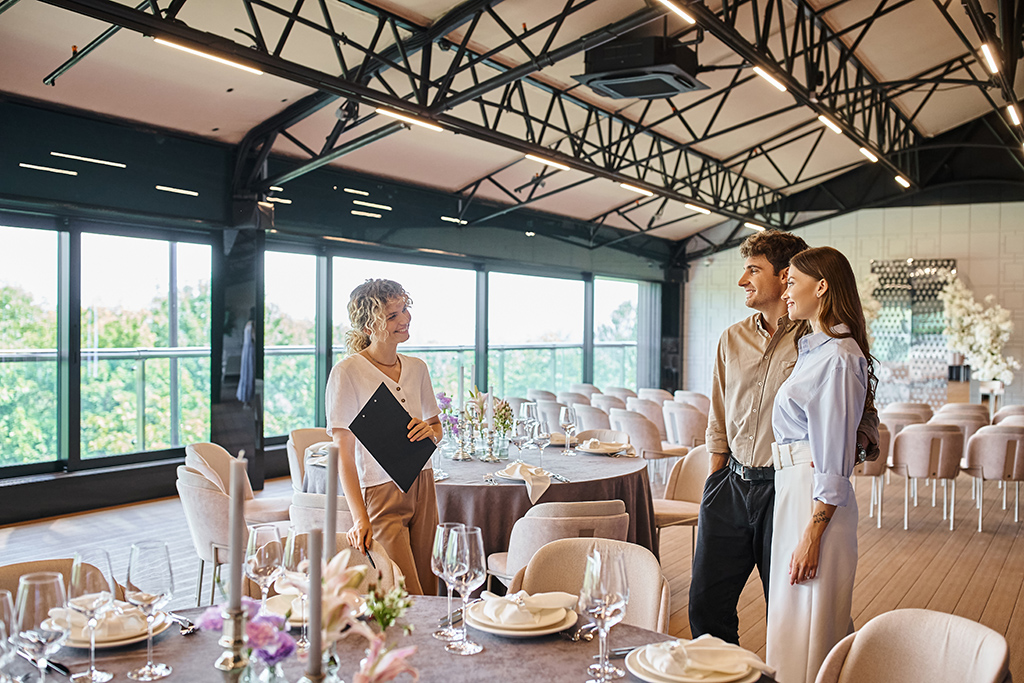
Meeting with your venue’s event team before, during, and after your event helps keep costs transparent, address any changes promptly, and ensure there are no unexpected charges. Photo by LightFieldStudios.
4. Room Layouts and Furniture
A room may look perfect during a venue tour, but your event setup could require something completely different.
Theatre-style seating, cabaret layouts, classroom setups, boardroom meetings and networking receptions all have different space and furniture requirements.
You may also need additional tables, chairs, staging, lecterns or furniture for registration and networking areas.
Budget tip:
Share your event format and expected guest numbers with the venue as early as possible. A good venue team can help you determine the most effective layout before you commit to additional equipment or space.
5. Signage and Branding
Your event might have a strong visual identity, but bringing that branding into the physical venue can come with additional costs.
Think about registration signage, directional signs, banners, branded screens, printed materials and displays.
Even small details can add up. Particularly when you’re ordering materials specifically for a single event.
Budget tip:
Prioritise signage that improves the guest experience. Clear directional signs and registration information are often more valuable than excessive decorative branding.
Where possible, consider reusable signage or digital displays that can be adapted for future events.
6. Accessibility
Accessibility shouldn’t be treated as an optional extra. It should be part of your event planning from the beginning.
Depending on your audience and event format, you may need to consider step-free access, accessible seating, hearing assistance, captioning, accessible presentation materials or additional support for guests.
Planning for accessibility early can help you identify requirements before they become last-minute expenses.
Budget tip:
Ask your venue about its accessibility provisions before booking and communicate any specific requirements as early as possible. This allows your venue team to help you find appropriate solutions and avoid unexpected changes later.

At ISH Venues, our central London event spaces are designed to support everything from conferences and meetings to training days, receptions and larger-scale events. With in-house catering and dedicated event and AV support, our team can help you plan the details that make an event work from start to finish.
7. Travel and Accommodation
Your venue might be within budget, but what will it cost your delegates to actually get there?
For events bringing together guests from different cities or countries, transport and accommodation can become a significant part of the overall event spend.
Consider public transport links, parking, airport connections and nearby accommodation when comparing venues.
For international events, a centrally located venue can make a particularly meaningful difference to the overall delegate experience.
Budget tip:
Don’t assess a venue’s cost in isolation. Consider the total cost of attending the event for your guests, including travel time and transport.
8. Cleaning, Waste, and Event Breakdown
The work doesn’t necessarily end when your final guest leaves.
Depending on your event, additional cleaning, waste disposal, furniture removal or breakdown time may be required.
This is particularly important for exhibitions, receptions and events involving food, drinks or temporary installations.
Budget tip:
Clarify what is included in your venue hire agreement and what happens after the event. Knowing when you need to vacate the space can also help you avoid additional charges for overtime.
9. Last-Minute Changes
Even the best event plans change.
A speaker’s presentation needs a different screen. Your guest numbers increase. The room layout needs adjusting. You suddenly need another microphone.
Some changes may be minor, while others can affect staffing, catering, equipment or room hire.
Budget tip:
Keep a contingency fund. A good rule of thumb is to reserve around 5–10% of your overall event budget for unexpected expenses, depending on the complexity and scale of your event.
That way, a last-minute change doesn’t have to become a last-minute crisis.
10. VAT and Additional Charges
One of the simplest ways to avoid an unpleasant surprise is to understand exactly what your quoted prices include.
Some event costs may be advertised excluding VAT, while others may include additional services or charges separately.
When comparing venues, make sure you’re comparing like for like.
Budget tip:
Ask for a full, itemised quote and check whether prices include VAT, staffing, equipment, catering, setup and breakdown.

Working closely with your venue and event team when creating your budget helps identify potential costs early, avoid unexpected expenses, and ensure every element of your event is accounted for. Photo by ASphotostudio.
Don’t Just Budget for the Venue — Budget for the Experience
A successful event budget isn’t simply about finding the cheapest venue.
It’s about understanding the full cost of delivering the experience you want.
When comparing venues, consider the expertise and support that comes with the space. A venue team that can help coordinate catering, AV, room layouts and event logistics can reduce the number of suppliers you need to manage. And potentially reduce the risk of unexpected costs.
Because the best event budget isn’t necessarily the smallest one.
It’s the one where you know exactly what you’re paying for, and aren’t caught out by what you didn’t expect.
Have you also read these articles?
The Right Setup for the Right Occasion: A Venue Room Guide
Hosting International Delegates