


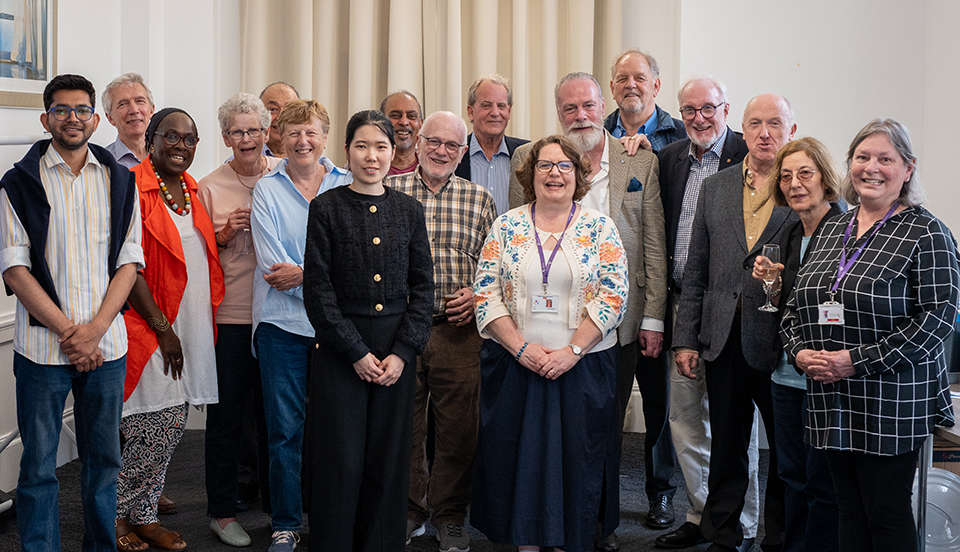
02 Sep Planning Multi-Generational Events
Planning an event for one audience is challenging enough. Planning an event that appeals to Gen Z, Millennials, Gen X and Baby Boomers at the same time can feel like an entirely different task.
Different generations have grown up with different technologies, social expectations, communication styles and ideas of what makes an event worthwhile. Yet the answer isn’t to create four completely separate experiences.
The most successful multi-generational events focus on shared needs rather than generational stereotypes: connection, comfort, accessibility, good food, engaging content, clear communication and the opportunity to participate.
As workplaces, professional networks and social groups become increasingly age-diverse, understanding how to create events that work across generations is becoming an increasingly valuable event-planning skill.
So, how can you design an event that feels relevant to everyone?
First, forget the stereotypes
Before looking at the differences between generations, it is important to acknowledge that generational categories are not rigid personality types.
Pew Research Center describes generations as useful but imperfect cultural groupings, with boundaries that should be treated as guidelines rather than definitive distinctions.
That means you shouldn’t assume that every Gen Z attendee wants an Instagrammable event, every Baby Boomer prefers a formal dinner, or every Millennial wants an app for everything.
Instead, generational differences can be useful when thinking about broad expectations and habits.
For example, younger attendees may expect information to be readily available online and may be particularly comfortable with digital registration and social sharing. Older attendees may place greater emphasis on straightforward communication, physical accessibility and the human element of an event.
But there is significant overlap.
Everyone wants to know:
- Where is the event?
- What is happening?
- When does it start and finish?
- What will it cost?
- Is there food and drink?
- Will I be comfortable?
- Who else will be there?
- Will it be worth my time?
The key to multi-generational event planning is finding the intersection between these needs.
Understand what each generation can bring to the room
Rather than asking, “What does this generation like?”, ask: “What might this audience need to feel comfortable, engaged and valued?”
Gen Z: Connection, authenticity and participation
Gen Z attendees have grown up in an environment where digital communication is second nature. However, that doesn’t mean they want every event to happen through a screen.
In fact, recent Eventbrite research suggests the opposite. Its 2026 Social Study found that 79% of 18-to-35-year-olds planned to attend more events in 2026, while younger audiences increasingly value experiences that feel authentic, participatory and less curated.
That creates an interesting opportunity for event planners.
Instead of simply providing a stage and asking Gen Z to sit and listen, consider how they can take part in the experience.
This could mean:
- Interactive workshops
- Live Q&As
- Networking activities
- Collaborative sessions
- Hands-on demonstrations
- Informal discussion spaces
- Social or creative activities
- Opportunities to meet people with similar interests
Gen Z also shouldn’t automatically be equated with nightlife. Eventbrite’s recent research into “soft clubbing” suggests younger audiences are increasingly interested in social experiences that combine entertainment with wellbeing, connection and more flexible hours.
For event planners, this means there is room to rethink the traditional assumption that the best event is necessarily the longest or latest one.
Millennials: Experiences with purpose
Millennials occupy an interesting position in a multi-generational audience.
They are comfortable with digital technology but have also experienced the transition from predominantly offline to predominantly online communication. They are often balancing work, family, financial commitments and increasingly busy schedules.
Consequently, value matters.
That doesn’t necessarily mean making an event cheap. It means making the experience feel worthwhile.
Consider building in opportunities for:
- Professional networking
- Learning and development
- Personal development
- Meaningful conversations
- Unique experiences
- Food and hospitality
- Opportunities to connect beyond formal presentations
Eventbrite’s UKI trends research found that 57% of consumers were looking for personal growth in 2025, rising to 72% among Gen Z, demonstrating the wider appetite for events that provide something beyond passive entertainment.
A conference, seminar or networking event can therefore become much more compelling when attendees leave with something tangible: a new connection, skill, idea, perspective or experience.
Gen X: Don’t overlook the bridge generation
Gen X can sometimes disappear from conversations about generational marketing.
Sandwiched between Millennials and Baby Boomers, they are an important part of many professional audiences. And can also act as a bridge between different expectations.
Born between 1965 and 1980 according to Pew Research Center‘s commonly used definition, Gen X grew up during the transition from analogue to digital communication.
For event planners, this can translate into an audience that is comfortable with technology but doesn’t necessarily want technology to dominate the experience.
They may appreciate:
- Efficient registration
- Clear information
- Good-quality presentations
- Practical takeaways
- Networking without excessive structure
- Comfortable spaces
- A well-organised schedule
- Opportunities to socialise without feeling pressured
The lesson is simple:
Don’t make technology the event. Make technology support the event.
Baby Boomers: Experience, comfort, and connection
Baby Boomers, commonly defined as people born between 1946 and 1964, are another important part of many professional, cultural and social events.
For this audience, clear communication and a well-organised experience can be particularly important.
That doesn’t mean avoiding technology. Instead, provide choice.
For example, digital invitations can sit alongside clear email communication. Online registration can be supported by a straightforward contact option. Digital event programmes can be complemented by printed information where appropriate.
Comfort also matters.
Consider:
- Comfortable seating
- Good acoustics
- Appropriate lighting
- Easy-to-navigate spaces
- Clearly signposted facilities
- Accessible entrances and facilities
- Seating options throughout the venue
- Breaks during longer sessions
These considerations aren’t exclusively beneficial to older attendees, either.
A comfortable chair benefits everyone. Clear signage benefits everyone. Good acoustics benefit everyone. A break during a three-hour session benefits everyone.
Accessibility is rarely a generational issue. It is an attendee experience issue.
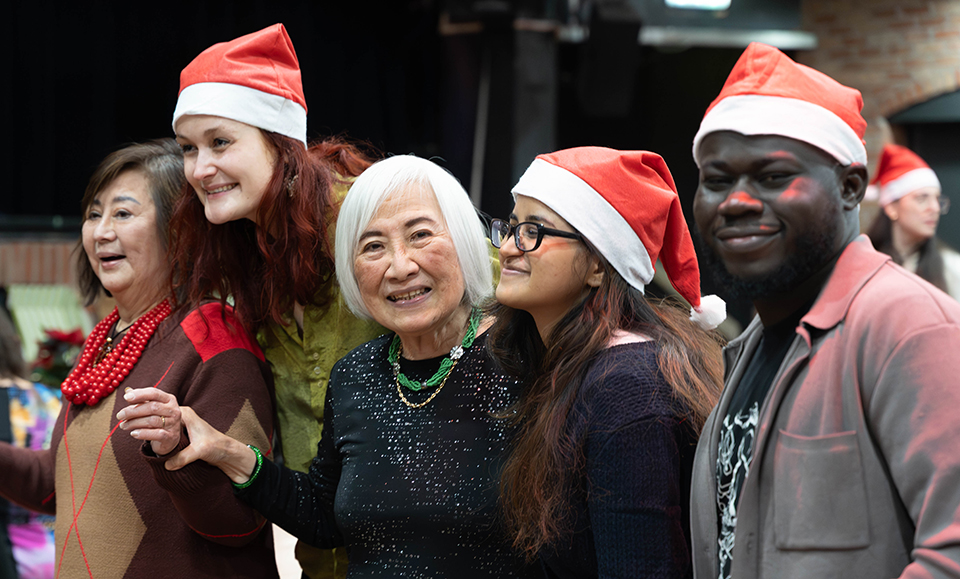
Finding common ground through shared traditions, festive food, music and meaningful experiences can bring multi-generational attendees together, creating a celebration everyone can enjoy, like this one at International Students House in Venue 1 for a Christmas Celebration.
Build around common ground
The biggest mistake when planning a multi-generational event is trying to create something for everyone by adding everything.
More activities don’t necessarily equal a better event.
Instead, identify the common ground between your audiences.
For most successful events, that might include:
1. Connection
People attend events because they want to connect — with colleagues, potential clients, industry peers, friends, communities or new ideas.
Design networking into the event rather than treating it as something that happens accidentally.
Create spaces where people can talk without shouting over loud music. Use facilitated introductions when appropriate. Provide breaks that allow people to continue conversations.
2. Good hospitality
Food and drink can be one of the easiest ways to bring different generations together.
But variety matters.
Consider providing:
- Vegetarian and vegan options
- Alcohol-free drinks
- Coffee and tea
- Light refreshments
- Substantial meal options for longer events
- Clearly labelled dietary options
Hospitality shouldn’t be an afterthought. It can become part of the social experience itself.
3. Comfortable spaces
Not every attendee wants to stand in a crowded room for four hours.
When planning the layout, think about creating different environments:
The main space: presentations, performances or group activities.
The social space: informal conversation and networking.
The quiet space: somewhere attendees can step away from noise and stimulation.
The refreshment space: somewhere people naturally gather and interact.
This approach allows attendees to choose how they participate.
Give attendees different ways to participate
One of the most effective strategies for multi-generational events is choice.
Not everyone wants to participate in exactly the same way.
A younger attendee might happily contribute to a live poll from their phone. Another attendee might prefer asking a question during a Q&A. Someone else might prefer speaking to a presenter afterwards.
None of these approaches is inherently better.
A strong event provides multiple routes into the experience.
For example, during a conference session you could combine:
- A presentation
- Live polling
- Audience Q&A
- Small-group discussion
- Networking
- Digital resources
- Post-event discussion
This transforms an event from a one-way broadcast into a shared experience.
Don’t underestimate the power of technology or the importance of keeping it simple
Technology can make multi-generational events significantly easier to manage.
Event apps, digital tickets, QR codes, live polling, social media and digital event programmes can improve the experience when used appropriately.
But technology should solve a problem rather than exist simply because it is available.
Ask: Does this make the event easier, more accessible or more engaging?
If the answer is yes, use it.
If the answer is no, reconsider.
And whenever possible, provide alternatives.
For example, if attendees can submit questions through an event app, also provide an opportunity to ask questions verbally. If registration is digital, ensure attendees know who to speak to if they have problems.
The goal isn’t to make every generation equally tech-savvy.
The goal is to make the technology easy enough that nobody has to be.
Think carefully about communication
Multi-generational event planning begins long before the doors open.
Communication is one of the easiest ways to make an event feel either welcoming or unnecessarily complicated.
Your event information should answer the practical questions attendees are likely to have:
- What is the event?
- Where is it?
- What time should I arrive?
- How long will it last?
- Is there parking or public transport nearby?
- What should I wear?
- Is food provided?
- Are there accessibility facilities?
- What is the cancellation policy?
- Who should I contact with questions?
Keep the information consistent across your website, emails, ticketing platform and social media.
And don’t assume that everyone wants to receive information through the same channel.
A multi-channel approach can be particularly useful for a mixed-age audience:
Email: Detailed information and reminders.
Website: Full event information.
Social media: Discovery, updates and engagement.
Event platform: Registration, tickets and schedules.
On-site signage: Immediate practical information.
The important thing is that the information doesn’t contradict itself.
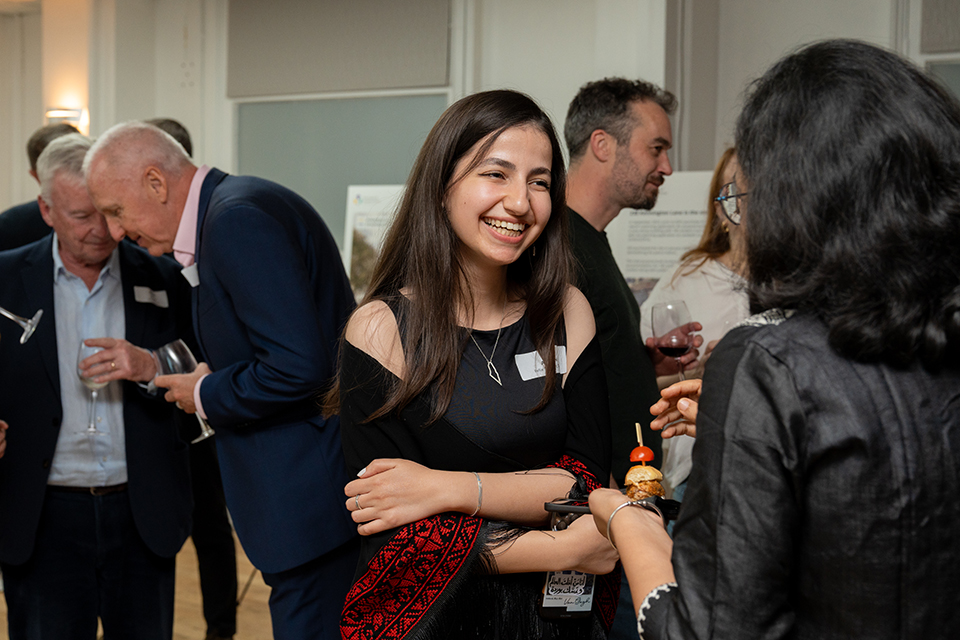
Creating comfortable, flexible spaces with a mix of seating and open networking zones, alongside refreshments such as drinks and canapés, gives every generation the opportunity to relax, connect and network in a way that suits them.
Make the venue work for your audience
The physical environment can have an enormous impact on whether a multi-generational event succeeds.
Before choosing a venue, think beyond capacity. Ask:
Can everyone hear?
Poor acoustics can undermine an otherwise excellent presentation.
Can everyone see?
Consider sightlines, screen positioning and lighting.
Can everyone move around comfortably?
Think about accessibility, corridors, entrances, seating arrangements and facilities.
Are there different types of spaces?
A large room may be ideal for presentations, but smaller rooms can create better environments for workshops and networking.
Is there somewhere to take a break?
A quiet area can be just as valuable as the main event space.
Does the venue support the event’s atmosphere?
A formal corporate conference, creative workshop and celebratory gathering may all require completely different environments.
The right venue doesn’t simply accommodate attendees.
It helps shape how they experience the event.
Food can be a generational connector
Food is one area where event planners can create genuine common ground.
Rather than attempting to identify one “generational” menu, offer choice and variety.
A good catering strategy might include:
- Familiar options alongside something more adventurous
- Vegetarian and vegan dishes
- Clearly labelled allergens
- Alcoholic and alcohol-free drinks
- Coffee, tea, and soft drinks
- Snack options throughout longer events
- Informal food stations where appropriate
Food can also become part of the event itself.
Interactive food stations, shared tables, tasting experiences, cooking demonstrations or regional menus can create opportunities for conversation.
And don’t overlook timing.
A younger audience may appreciate an event that starts earlier and finishes earlier, while an evening reception may work well for another audience.
Again, choice is the solution.
Build intergenerational interaction into the experience
A multi-generational event shouldn’t simply have different generations sitting in the same room.
The real opportunity is to encourage them to interact with one another.
Consider activities that deliberately mix ages and experiences.
For example:
Mentoring circles
Pair attendees from different career stages for short conversations.
“Ask the Expert” sessions
Allow attendees to share expertise across different generations.
Storytelling
Invite participants to share experiences around a common theme.
Collaborative workshops
Put people into mixed groups to solve a problem together.
Generational playlists
Use music from different eras as an icebreaker or social activity.
Nostalgia with a modern twist
A retro theme doesn’t have to exclude younger audiences. It can become an opportunity for different generations to share cultural references.
This is where generational diversity becomes an asset rather than a logistical challenge.
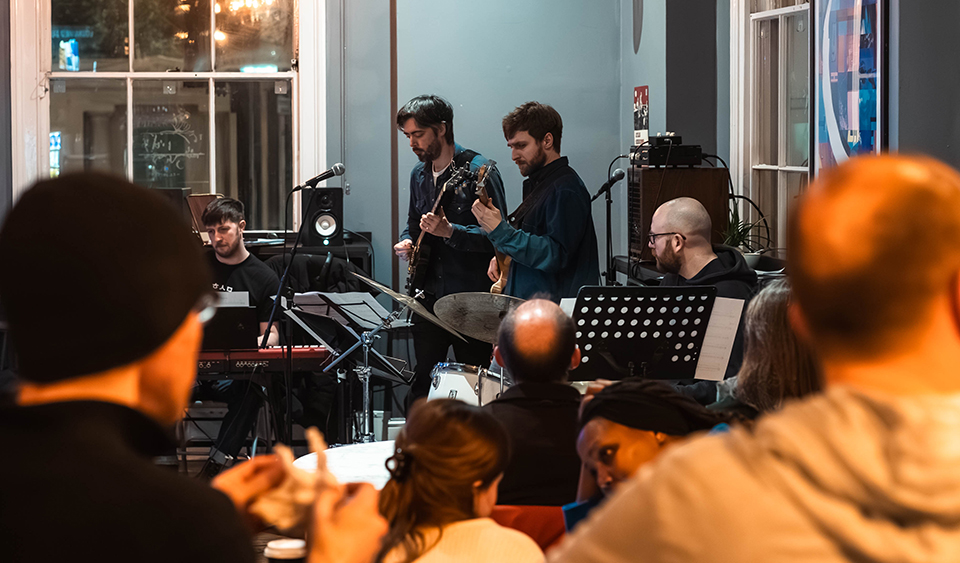
Live music can tap into nostalgia across generations, creating a lively, familiar atmosphere while bringing attendees together through songs and shared memories.
Use nostalgia carefully
Nostalgia can be a powerful event tool, particularly when working with audiences spanning several decades.
Interestingly, nostalgia isn’t necessarily something that only appeals to older attendees. Eventbrite has reported increased interest in retro-themed dance events in the UK, with attendance at nostalgia-focused dance events rising 19% between August 2024 and July 2025.
The key is to make nostalgia inclusive.
Instead of creating an event entirely around one decade, consider a broader theme.
For example:
“Through the Decades”
could incorporate music, fashion, food, film and cultural moments from the 1960s through to today.
This gives everyone something familiar while also introducing attendees to something new.
Don’t make everything about age
Perhaps the most important principle of multi-generational event planning is to avoid making age the central theme.
People are more than their generation.
A 25-year-old and a 65-year-old might have completely different tastes — or they might love the same band, profession, sport, food, cause or hobby.
Instead of asking:
“How do we make this appealing to Gen Z?”
ask:
“What would make this experience genuinely valuable to our audience?”
That shift changes the entire planning process.
It encourages you to focus on:
- Purpose
- Connection
- Accessibility
- Comfort
- Choice
- Participation
- Hospitality
- Quality content
- Authentic experiences
And these are qualities that can benefit everyone.
Accessibility should be part of planning from the beginning
Accessibility shouldn’t be treated as a final checklist.
It should be considered from the beginning of the planning process.
Think about:
- Step-free access
- Accessible toilets
- Seating arrangements
- Hearing assistance
- Lighting
- Acoustics
- Dietary requirements
- Clear signage
- Accessible digital content
- Captioning where appropriate
- Rest areas
- Transport information
And make accessibility information easy to find before the event.
This is particularly important for multi-generational audiences because people’s accessibility requirements can vary significantly regardless of age.
Ultimately, designing for accessibility tends to make an event better for everyone.
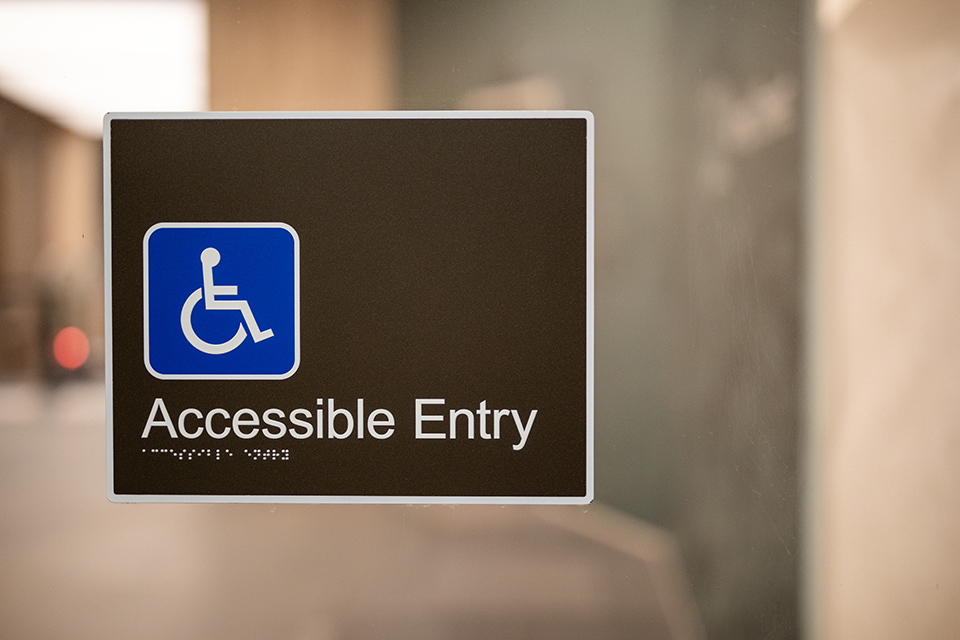
Ensuring accessibility information is easy to find during an event is particularly important for multi-generational audiences because people’s accessibility requirements can vary significantly regardless of age. Photo by Lightitup_now.
A multi-generational event is ultimately about bringing people together
The differences between generations can sometimes make event planning seem more complicated than it needs to be.
Yes, different age groups may have different expectations around technology, communication, socialising and event formats.
But there is considerably more that brings audiences together than separates them.
People want to:
- feel welcome
- meet other people
- learn something
- have a good experience
- enjoy good food and comfortable surroundings
And, most importantly, they want to feel that their time has been well spent.
The best multi-generational events don’t try to create an experience that is perfect for Gen Z, perfect for Millennials, perfect for Gen X and perfect for Baby Boomers.
They create an experience that is worth attending for everyone.
By prioritising accessibility, choice, connection, thoughtful communication and genuine participation, event planners can turn generational diversity from a challenge into one of the event’s greatest strengths.
After all, an event doesn’t become memorable because everyone in the room was the same.
It becomes memorable because people had something meaningful to share.
Have you also read these articles?
Event Fatigue: How to Create Events People Actually Want to Attend
How to Budget for Hidden Costs of Event Planning